I am in limbo at the moment, struggling manfully with a novel I refuse to give up on (Stella Gibbons, The Bachelor) but with which I can make very limited progress. This was a spur of the moment, I must have something to read purchase, done in a spirit of optimism and refusal to acknowledge the evidence of Starlight and its predecessors. I have been here before - some novels almost refuse to be read, characters blur together into an amorphous mass of old ladies and "incidents" either flatly refuse to happen, or simply fail to raise any interest in the reader. text just slides off the eyes like unwanted homework.
I call this the "meh" school of literature.
If there has been one thing that has deterred me from ever trying to write fiction myself it is the fear that what I produce would be not bad, but boring. I don't under-estimate for one second the difficulty of writing a good novel, one with interesting characters and plot development, that entertains with incident, characterisation or humour, that has something original to say. The fact that the novels I have written about her in previous months ever got published let alone bought, read and enjoyed is a triumph.
But I will finish this novel, which bluntly has none of these things, to make the investment of however many hours of my life it is not completely pointless, and then take a cold look at my reading list selection from this point on.
Tuesday, 23 April 2013

Wednesday, 13 February 2013
The Drop - Michael Connolly
The Drop sees the return of Harry Bosch, Michael Connolly's grizzled Los Angeles police detective. Bosch is said to have seen action in Vietnam, and this novel appears to be set in the present day, so he presumably is getting on in years. Having retired and returned to work he now extends his service using a deferred retirement scheme - which gives us the title of the book. Yes, that's right, a police story using an acronym for deferred retirement as its title. Of course there is an intended pun, in that the primary investigation in the novel is a suspected suicide by high rise jump. There is a sub-plot involving a DNA hit on a long unsolved murder which is integrated nicely into the overall structure - Connolly is a very experienced writer with 25 or so books to his name, and it shows.
This is a guilty pleasure - there is no pretence at anything other than entertainment, and I have to be honest I found it a very easy, undemanding, and enjoyable read. Bosch conforms to the stereotype defined by Raymond Chandler long ago, a loner who struggles with relationships and authority, determined to do what is right irrespective of the personal cost:
"Down these mean streets a man must go who is not himself mean, who is neither tarnished nor afraid. The detective in this kind of story must be such a man. He is the hero; he is everything. He must be a complete man and a common man and yet an unusual man. He must be, to use a rather weathered phrase, a man of honor - by instinct, by inevitability, without thought of it, and certainly without saying it. He must be the best man in his world and a good enough man for any world..... He is a relatively poor man, or he would not be a detective at all. He is a common man or he could not go among common people. He has a sense of character, or he would not know his job. He will take no man's money dishonestly and no man's insolence without due and dispassionate revenge. He is a lonely man and his pride is that you will treat him as a proud man or be very sorry you ever saw him. He talks as the man of his age talks -- that is, with rude wit, a lively sense of the grotesque, a disgust for sham, and a contempt for pettiness....If there were enough like him, the world would be a very safe place to live in, without becoming too dull to be worth living in. ” (The Simple Art of Murder)
That captures Bosch, and many other fictional detectives, so well.
In any long running series there are some challenges for the writer - how to avoid repeating yourself and being predictable while at the same time working within the recognised structure - avoiding gimmicks like relocating to different locations, (although the last Bosch novel did end up in Hong Kong). As a police detective there are constraints on where and how Bosch can work, limiting the writer's scope for innovation. And within these constraints you can only have so many angry confrontations with impatient supervisors, interrogations of over-confident suspects, intuitive breakthroughs from tiny clues, etc, etc. Connolly seems to have recognised these issues, but shrugged and thought people will keep buying the books so no real need to keep things fresh.
As a result this novel has a reheated feel, one of Connolly going through the motions. Bosch has a short term romance - but guess what, work gets in the way. City Hall politicians conspire to frustrate his investigation. A killer wonders who will play him in the film of his exploits. And a suspected suicide turns out to be, guess what, a suicide! There's nothing here to surprise or challenge the reader, but it is clear that the reader, even this one, sometimes wants plain undemanding fare. Same again please.
Connolly suffers from the comparison with Chandler, as every crime writer would, but if you want a murder story that aspires to be something that will just pass away a train journey, it's Chandler every time.
Wednesday, 6 February 2013
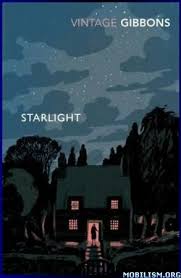
Starlight - Stella Gibbons
This is a curious novel. It follows two impoverished sisters, Gladys and Annie, living in a run down part of North London. Their landlord sells their home to a "rackman" - a phrase many people will be unfamiliar with, but used here to describe an unscrupulous landlord likely to drive up rents, harass tenants, and ignore the fabric of their properties. If you are interested in the original Rachman this makes an interesting read - http://en.wikipedia.org/wiki/Peter_Rachman.
 While the new landlord does indeed appear to be closely modelled on the original, instead of turning the sisters out into the street he installs his ailing but apparently much loved wife in the neighbouring house. She has an au pair, a German refugee, Erika, and a daughter, Peggy. Peggy's parallel unhappy love story has all the hall marks of a short story worked into the longer narrative (nothing wrong with that by the way - Raymond Chandler did much the same thing to stunning effect in some of his novels). The sisters, drawn with some affection but no illusions as to their frailities (Glad is a gossipy fool, Annie a nervous hypochondriac), turn to the local clergy for assistance. The vicar and his curate are another pair in this story of couples, again drawn with affection but unblinkingly, their flaws and weaknesses shown without hesitation. The eccentric lodger living in the attic appears in the narrative occasionally adding a further element of mystery to the story.
As a novel Starlight has its limitations. We slowly come to like the central characters, more or less, are happy for them when their lives improve, and take pleasure in their small victories and enjoyments. The wider cast is equally well drawn, but are closer to caricature. The novel has some awkward moments which to me indicated some clumsiness in drafting - people behaving in ways that do not feel natural or convincing, such as the landlord Pearson being knocked down by the 60 year old vicar, or the (spoiler) motiveless murder of the old man from the attic.
While the new landlord does indeed appear to be closely modelled on the original, instead of turning the sisters out into the street he installs his ailing but apparently much loved wife in the neighbouring house. She has an au pair, a German refugee, Erika, and a daughter, Peggy. Peggy's parallel unhappy love story has all the hall marks of a short story worked into the longer narrative (nothing wrong with that by the way - Raymond Chandler did much the same thing to stunning effect in some of his novels). The sisters, drawn with some affection but no illusions as to their frailities (Glad is a gossipy fool, Annie a nervous hypochondriac), turn to the local clergy for assistance. The vicar and his curate are another pair in this story of couples, again drawn with affection but unblinkingly, their flaws and weaknesses shown without hesitation. The eccentric lodger living in the attic appears in the narrative occasionally adding a further element of mystery to the story.
As a novel Starlight has its limitations. We slowly come to like the central characters, more or less, are happy for them when their lives improve, and take pleasure in their small victories and enjoyments. The wider cast is equally well drawn, but are closer to caricature. The novel has some awkward moments which to me indicated some clumsiness in drafting - people behaving in ways that do not feel natural or convincing, such as the landlord Pearson being knocked down by the 60 year old vicar, or the (spoiler) motiveless murder of the old man from the attic.
It is probably as a period piece that this novel holds the most interest, a portrait of a time when one generation of English people were still looking back to the war, and the later generation warming up to the 1960s. We aren't told when the action of the novel occurs, and Gibbons uses this imprecision to show the different perspectives of her characters. One of the older characters refers in a slip of the tongue to drawing the curtains as "doing the blackout"; the older characters shop as if they were still subsisting on rations (in a way they are), and live in world where houses are still uninhabitable from damage from the Blitz. The younger ones go to a dance featuring the long-haired "Spacemen", locating the novel's events right up to the time of publication (1967), more than 20 years after the end of the war. Erika brings this gap being a refugee from a continent seemingly only just recovering from the war. The narrator, and the author, firmly sides with the older generation, having little sympathy for longer than collar length hair, drawing links between this debauchery and mindless street fighting and murder.
What makes the novel genuinely weird is the plot line about possession. Yes, demonic, head turning, green eyed possession, eventually cast out by crucifix wielding, holy water splashing clergymen. I've exaggerated for comic effect slightly here, but only a little. It is a decidedly odd element to introduce, and despite its centrality to the climax of the novel actually adds little to the overall impact of the story.
I bow to no-one in my admiration of the genius of Stella Gibbons, which peeps through here in many elements of this novel, but overall I can't deny that this is really for the completists amongst us. Many thanks nonetheless to Vintage for republishing these long lost novels.
It is probably as a period piece that this novel holds the most interest, a portrait of a time when one generation of English people were still looking back to the war, and the later generation warming up to the 1960s. We aren't told when the action of the novel occurs, and Gibbons uses this imprecision to show the different perspectives of her characters. One of the older characters refers in a slip of the tongue to drawing the curtains as "doing the blackout"; the older characters shop as if they were still subsisting on rations (in a way they are), and live in world where houses are still uninhabitable from damage from the Blitz. The younger ones go to a dance featuring the long-haired "Spacemen", locating the novel's events right up to the time of publication (1967), more than 20 years after the end of the war. Erika brings this gap being a refugee from a continent seemingly only just recovering from the war. The narrator, and the author, firmly sides with the older generation, having little sympathy for longer than collar length hair, drawing links between this debauchery and mindless street fighting and murder.
What makes the novel genuinely weird is the plot line about possession. Yes, demonic, head turning, green eyed possession, eventually cast out by crucifix wielding, holy water splashing clergymen. I've exaggerated for comic effect slightly here, but only a little. It is a decidedly odd element to introduce, and despite its centrality to the climax of the novel actually adds little to the overall impact of the story.
I bow to no-one in my admiration of the genius of Stella Gibbons, which peeps through here in many elements of this novel, but overall I can't deny that this is really for the completists amongst us. Many thanks nonetheless to Vintage for republishing these long lost novels.
Friday, 1 February 2013
Reading and Forgetting (or Cold Comfort farm, again)
Difficult though it is to admit, I often read novels and then forget what they are about. Not just minor details - whole novels slide past my eyes, to be quickly forgotten. Novels from the same author merge in the memory, and even relatively recently read books which I have written about here resist more detailed recollection. I am not sure this is just about quality, although that obviously is a factor - there are plenty of books I wish I never had to forget, quietly pressing the delete button in my brain minutes after the last page has been turned.

Why is this, and does it matter? I am not going to try an amateur dissertation on human memory here - that would be both arrogant and futile. I think we all understand at a basic level that the more carefully we read and consider a book, the more likely we are to remember it. Blogging about books I read is in part an attempt to anchor them in my memory and prevent them fading away, a bit like repeating one's lines in a play. But I also think that the way we read is more important. To illustrate this, an anecdote:
Stuck on a train recently I fired up my Kindle, and turned as I so often do the comforting arms of Stella Gibbons. I have written before and at length about the glories of Cold Comfort Farm, and it is probably the novel I would most like to read as I leave this earth, in the unlikely event I get that choice. Flora, as I am sure you know, goes to live with her bizarre relatives in darkest Sussex, and arrives to find the place largely deserted. She is shown to her bedroom, and describes it thus:
"She dressed in pleasant leisure, studying her room. She decided that she liked it.
It was square, and unusually high, and papered with a bold though faded design of darker red upon crimson. The fireplace was elegant, the grate was basket-shaped, and the mantelpiece was of marble, floridly carved, and yellowed by age and exposure. Upon the mantelpiece itself rested two large shells, whose gentle curves shaded from white to the richest salmon-pink; these were reflected in the large old silvery mirror which hung directly above it. The other mirror was a long one; it stood in the darkest corner of the room, and was hidden by a cupboard door when the latter was opened…..One wall was almost filled by a large mahogany wardrobe. A round table to match stood in the middle of the worn red and yellow carpet, which was covered with a design of big flowers. The bed was high, and made of mahogany; the quilt was a honeycoomb, and white."
So far as I can recall, for what that is worth, we don't revisit this rather sweet welcoming room again. Flora has an adjoining sitting room she uses to while away her time, but not this bedroom.
When I read this paragraph the other day what struck me was that I had never read it before. More precisely I had no memory, not the faintest echo, of having read this description before, despite the fact that I have read Cold Comfort at least once a year for more than thirty years - obsessive I know. How could that be? Had it been craftily inserted by some unscupulous Kindle editor for reasons unknown? Unlikely. Was this a case of the Eyre Affair coming to life? Even less likely. Or was this the first sign of early onset memory loss? My best guess is that I had read this paragraph before, but never really paid it any attention.
Why did it not stand out? The description is detailed and well written, and is noteworthy because it is not in the mock heroic form used for many other descriptive passages, nor the humourous style used for much of the rest of the narrative. It is not clear whether the narrator here is Flora or the author - the gentle appreciation of the room could come from either. There is nothing arch or judgemental about the description, which there usually is from Flora's descriptions of the farm. It occurs to me it might even be text from an abandoned alternative novel that Gibbons is recycling here. I have however edited out for reasons of brevity some comments about mirrors found in commercial hotel bedrooms that might give a different perspective.
I can only conclude I didn't remember this section because I have never read it properly. It doesn't matter that Flora has a nice bedroom at the farm, so I have mentally skipped this page to move on to the wonderful "porridge breakfast confrontation with Adam and his clettering twigs.
What other gems might there be lurking unappreciated in CCF - I will have to re-read it to check......
Why is this, and does it matter? I am not going to try an amateur dissertation on human memory here - that would be both arrogant and futile. I think we all understand at a basic level that the more carefully we read and consider a book, the more likely we are to remember it. Blogging about books I read is in part an attempt to anchor them in my memory and prevent them fading away, a bit like repeating one's lines in a play. But I also think that the way we read is more important. To illustrate this, an anecdote:
Stuck on a train recently I fired up my Kindle, and turned as I so often do the comforting arms of Stella Gibbons. I have written before and at length about the glories of Cold Comfort Farm, and it is probably the novel I would most like to read as I leave this earth, in the unlikely event I get that choice. Flora, as I am sure you know, goes to live with her bizarre relatives in darkest Sussex, and arrives to find the place largely deserted. She is shown to her bedroom, and describes it thus:
"She dressed in pleasant leisure, studying her room. She decided that she liked it.
It was square, and unusually high, and papered with a bold though faded design of darker red upon crimson. The fireplace was elegant, the grate was basket-shaped, and the mantelpiece was of marble, floridly carved, and yellowed by age and exposure. Upon the mantelpiece itself rested two large shells, whose gentle curves shaded from white to the richest salmon-pink; these were reflected in the large old silvery mirror which hung directly above it. The other mirror was a long one; it stood in the darkest corner of the room, and was hidden by a cupboard door when the latter was opened…..One wall was almost filled by a large mahogany wardrobe. A round table to match stood in the middle of the worn red and yellow carpet, which was covered with a design of big flowers. The bed was high, and made of mahogany; the quilt was a honeycoomb, and white."
So far as I can recall, for what that is worth, we don't revisit this rather sweet welcoming room again. Flora has an adjoining sitting room she uses to while away her time, but not this bedroom.
When I read this paragraph the other day what struck me was that I had never read it before. More precisely I had no memory, not the faintest echo, of having read this description before, despite the fact that I have read Cold Comfort at least once a year for more than thirty years - obsessive I know. How could that be? Had it been craftily inserted by some unscupulous Kindle editor for reasons unknown? Unlikely. Was this a case of the Eyre Affair coming to life? Even less likely. Or was this the first sign of early onset memory loss? My best guess is that I had read this paragraph before, but never really paid it any attention.
Why did it not stand out? The description is detailed and well written, and is noteworthy because it is not in the mock heroic form used for many other descriptive passages, nor the humourous style used for much of the rest of the narrative. It is not clear whether the narrator here is Flora or the author - the gentle appreciation of the room could come from either. There is nothing arch or judgemental about the description, which there usually is from Flora's descriptions of the farm. It occurs to me it might even be text from an abandoned alternative novel that Gibbons is recycling here. I have however edited out for reasons of brevity some comments about mirrors found in commercial hotel bedrooms that might give a different perspective.
I can only conclude I didn't remember this section because I have never read it properly. It doesn't matter that Flora has a nice bedroom at the farm, so I have mentally skipped this page to move on to the wonderful "porridge breakfast confrontation with Adam and his clettering twigs.
What other gems might there be lurking unappreciated in CCF - I will have to re-read it to check......
Thankful Villages
This entry isn't about reading or books at all really, except that in a way it fits in with much of my non-fiction reading over the last twelve months,which has kept coming back to the World Wars of the twentieth century.
Humans are famously unable to comprehend large numbers. We deal much better with dozens, maybe even hundreds, but thousands? What does a crowd of thousand people look like? Or ten thousand? We understand the concept, but it stays at that level - we have nothing meaningful to equate it with in our day-to-day lives. This inability to envisage large numbers lies, I think, at the heart of people's problems with probability, whereby they mistake everyday coincidences with the supernatural.
A million British troops died in the First World War. More died in the Second, as well as significant numbers of civilians. I acknowledge of course that other countries suffered far higher rates of casualties. But what does that number mean? What do a million dead people look like? What is the impact of a million deaths on a country the size of the UK?
Essentially it means that every family lost someone, or knew someone who died in the war. That is where (finally) the concept of the Thankful Villages comes in. There are over four thousand village parishes in this country. But in only a very small number of parishes - it is hard to be exact, because the records are inevitably not 100% accurate, and you can always argue about definitions - did all the servicemen who set off to war return home alive. The best estimates are that there are about between 30 and 50 such villages in England and Wales, and not one in Scotland or Northern Ireland. Those figures really brought home to me the scale of the devastation, how all encompassing it was. Incidentally I have read elsewhere that France has only one such village.
For anyone living in a town or city, the important thing to realise is how tiny some of these villages are. Ten men lost from a hamlet of (say) sixty people would have devastated many communities. The names of the Thankful Villages are part of the special impact of the idea - the English have a particular brilliance in naming their villages, and some of the Thankful few epitomise that flair - Herodsfoot, Ousby, Langton Herring, and Colwinston to name a few.
For me the concept of the Thankful Villages brings home with greater impact than simple numbers the scale of the cost of the Great War. Very few people escaped without losing a family member or friend. The war could not be escaped wherever you lived, whatever you did, no matter how remote or obscure. And of course the cost of the war, in lives lost, books not written, weddings not celebrated and children not born, cannot be quantified, which is why a symbolic representation of this loss has such an impact and is so valuable.
You can read a lot more about the enduring fascination of the Thankful Villages here: http://www.hellfirecorner.co.uk/thankful.htm
Wednesday, 30 January 2013
Perfume: The Story of a Murderer - Patrick Suskind
This blog was originally going to be about that small sub-set of books that I found offensive, but re-reading parts of this particular novel reminded me just how objectionable I found it, and how puzzled I was that I seemed to be the only person who has a problem with it.
Google any combination of the words "Perfume" "Suskind" and "misogyny" or "feminism" and you won't find anything. And yet I am genuinely puzzled that feminists did not feel outraged by this novel. So what is my problem?
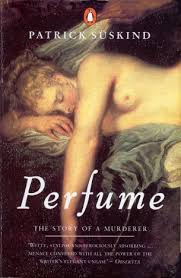 "Perfume: The Story of a Murderer is a 1985 literary historical cross-genre novel (originally published in German as Das Parfum) by German writer Patrick Süskind. The novel explores the sense of smell and its relationship with the emotional meaning that scents may carry. Above all it is a story of identity, communication and the morality of the human spirit."
So a story of a murderer - the clue is in the title - isn't about a lunatic murdering virgins and abusing their bodies to distill scent from them, but is about nice, fluffy things like identity, communication, and the human spirit. Is it really?
Imagine an advertisement for a film. It promises to feature the casual murder of 20 virgins - and the emphasis of their sexual status is Suskind's, not mine - followed by an orgy and scenes of cannibalism. The bodies of the murder victims are abused by the murderer in some fetishistic way to distill "perfume". What kind of film would you expect - an exploitative torture porn video nasty, or something literary and sophisticated.
I appreciate the case for the defence will be that I shouldn't take this too literally - despite Suskind's determined focus on making each scene as real as possible by his focus on the senses throughout the novel - and that this is magical realism, where the brutal slaughter of young women is a metaphor for.... - what exactly? This case is laid out, for example, in the dozens of laudatory reviews on Amazon, for example this one:
"I came to this book expecting to find a crime novel, or a thriller, about a serial killer. Instead I found a beautifully written and deeply researched novel about a young Frenchman with an unusual sense of smell and a unique gift for the art of the perfumier. In fact, the murders of young girls, so emphasised in the film, take second place to the marvellous descriptions of how perfume is made, and the way in which Grenouille gradually infiltrates the profession, becoming a master perfumier due to his prodigious gifts"
The murders of girls takes second place to the descriptions of how perfume is made? Really? I don't give a stuff about the technical detail as to how perfume is made, but I am pretty sure it doesn't involve murdering virgins. grenouille may have been a skilled perfumier, and I am sure Hitler could whip up a nice cheese omelette, but talk about missing the point.
To be as clear as possible, it is not the literary treatment of murder that I find objectionable - that would preclude me from appreciating large sections of world literature, including Shakespeare (Titus Andronicus, anyone?). Murder can be used to shock, to amuse, or to make any other number of points. It can even be handled in a way that is hard to stomach (for example, American Psycho). But the idea that women's bodies contain within them an essence that can be found as long as you kill enough of them, and that this is some way legitimises their killing, I found nauseating.
I am aware I have not made the case for the prosecution compellingly here - it is hard to define the offensive, even when it is staring you in the face. Equally I accept no-one else seems to have a problem with this novel and its treatment of women. But I found it nasty, brutal, and disturbing. If that was Suskind's intention, fine, but why is everyone else pretending this is a high minded dissertation on identity and the like?
PS. I started this blog entry using voice recognition - and this is what came out!! How sad he had a terrible chocolate!
"I found the misogyny in Patrick siskins perfume quite disturbing this is a lot of about a person who is has a terrible chocolate and grows up to become massive history skin is creating perfume and this instance decides bizarre me to create perfect from the dead bodies this is presented as being workable months of something or invite be quite sympathetic wants".
Let's start with the Wikipedia entry for it, which says
So a story of a murderer - the clue is in the title - isn't about a lunatic murdering virgins and abusing their bodies to distill scent from them, but is about nice, fluffy things like identity, communication, and the human spirit. Is it really?
Imagine an advertisement for a film. It promises to feature the casual murder of 20 virgins - and the emphasis of their sexual status is Suskind's, not mine - followed by an orgy and scenes of cannibalism. The bodies of the murder victims are abused by the murderer in some fetishistic way to distill "perfume". What kind of film would you expect - an exploitative torture porn video nasty, or something literary and sophisticated.
I appreciate the case for the defence will be that I shouldn't take this too literally - despite Suskind's determined focus on making each scene as real as possible by his focus on the senses throughout the novel - and that this is magical realism, where the brutal slaughter of young women is a metaphor for.... - what exactly? This case is laid out, for example, in the dozens of laudatory reviews on Amazon, for example this one:
"I came to this book expecting to find a crime novel, or a thriller, about a serial killer. Instead I found a beautifully written and deeply researched novel about a young Frenchman with an unusual sense of smell and a unique gift for the art of the perfumier. In fact, the murders of young girls, so emphasised in the film, take second place to the marvellous descriptions of how perfume is made, and the way in which Grenouille gradually infiltrates the profession, becoming a master perfumier due to his prodigious gifts"
The murders of girls takes second place to the descriptions of how perfume is made? Really? I don't give a stuff about the technical detail as to how perfume is made, but I am pretty sure it doesn't involve murdering virgins. grenouille may have been a skilled perfumier, and I am sure Hitler could whip up a nice cheese omelette, but talk about missing the point.
To be as clear as possible, it is not the literary treatment of murder that I find objectionable - that would preclude me from appreciating large sections of world literature, including Shakespeare (Titus Andronicus, anyone?). Murder can be used to shock, to amuse, or to make any other number of points. It can even be handled in a way that is hard to stomach (for example, American Psycho). But the idea that women's bodies contain within them an essence that can be found as long as you kill enough of them, and that this is some way legitimises their killing, I found nauseating.
I am aware I have not made the case for the prosecution compellingly here - it is hard to define the offensive, even when it is staring you in the face. Equally I accept no-one else seems to have a problem with this novel and its treatment of women. But I found it nasty, brutal, and disturbing. If that was Suskind's intention, fine, but why is everyone else pretending this is a high minded dissertation on identity and the like?
PS. I started this blog entry using voice recognition - and this is what came out!! How sad he had a terrible chocolate!
"I found the misogyny in Patrick siskins perfume quite disturbing this is a lot of about a person who is has a terrible chocolate and grows up to become massive history skin is creating perfume and this instance decides bizarre me to create perfect from the dead bodies this is presented as being workable months of something or invite be quite sympathetic wants".
Tuesday, 29 January 2013
Frankenstein (2) - Mary Shelley
In this post I would like to explore the possibility that the monster was the creation of Dr Frankenstein's ego or unconscious, and that the crimes in the novel were committed by the good doctor himself. Furthermore I would like to suggest that the source of this psychosis is his fear of his own sexuality. This answers the question most often posed about this novel - who is the real monster, Frankenstein or his creation, with the answer "They are one and the same". It also explains why the doctor and his creation are so often confused in popular culture, with the name Frankenstein being used for both of them.
To deal with the most obvious objection first - how could the monster be Victor's alter ego when there are numerous references in the novel to other people seeing the monster? It is important to remember that almost all this evidence is in fact presented through the doctor's conversations with the explorer, Walton, he meets at the beginning of the novel. We are invited to accept Victor as a reliable narrator, but objectively there is little reason to accept what he tells us without question. First and foremost his story is utterly fantastic - if you met someone raving about having created a monster you wouldn't just say, "oh yes, that's interesting". You would naturally want to know more, and to challenge what you are told. The absence of that challenge, just the plan recitation of the tale, presented unquestioningly, lulls the reader into accepting Frankenstein's story. As well as its fantastic nature, consider also the context - he is alone in an Arctic waste, chasing after a distantly glimpsed figure that may or may not have been himself. His story tells of a monster that kills his family and friends. Could not the monster be that part of his personality that he considers monstrous? Was, in fact, Dr Victor Frankenstein the first recorded case of manic schizophrenia or multiple personality disorder, the forerunner of another famous self-creator of monsters, Dr Jekyll?
This reading explains a lot, for example the lack of detail over how the monster is created - if this was a delusion then the subconscious could easily skip over the process to focus on the outcome. The disgust Victor feels in the process of creation can be explained by his disgust with procreation, simply put, sex, and cannot believe what he has done. In his psychological crisis he creates the monster to separate the innocent part of himself from the monstrous.
The murders of family and friends is further circumstantial evidence, although Victor can't be tied closely to any of the murders. There is enough evidence to at least cast suspicion, to the extent that he is even arrested for the killing of his best friend Clerval, and later held during his breakdown after the murder of his wife. The murder of his bride, on the first night of their honeymoon, represents the apotheosis of his sexual horror - rather than consummate his marriage he kills his wife and then faints. His conversations with the monster represent the inner monologue of the two parts of his personality. Virtually no-one else sees the monster in the whole of the novel, albeit admittedly with some exceptions. You would expect a beast lumbering across central Europe to be the cause of some comment - but the monster is never seen or spotted other than at a distance, and then only as reported by Frankenstein.
The exceptions to this are the family he haunts - but this could easily be Frankenstein himself, or just another delusion about his dreams of acceptance into a happy family. The other important exception is the occasion when explorer sees the monster just after doctor's death at the very end of the novel. This is harder to explain away, but hardly conclusive - the explorer is not necessarily the reliable narrator we are led to believe.
The source of Victor's psychosis emerges from a closer reading of the section of the novel dealing with the murder of his wife, Elizabeth. Chapter 22 opens with their engagement and wedding. Having been promised that he will return on his wedding night, VF is tortured by fear of the monster, and wants to shun the company of others - "I felt attracted to even the most repulsive among them, as to creatures of an angelic nature and celestial mechanism. But I felt I had no right to share their intercourse." Who is most commonly characterised by VF as angelic? Elizabeth of course. And who feels unworthy to share "intercourse" with his fellow man? VF feels guilty and worthless because of his "unhallowed acts" - a suggestion that he is unable to face sex with his bride on their wedding night because of previous repulsive and criminal acts. This is the language used to describe homosexuality in the 19th century.
Unable to accept his sexuality VF at first avoids contact with Elizabeth, running away from her to the extent of travelling the world. Apart from her, the part of his personality that wants a conventional relationship comes to the fore, and he agrees to marry her. Before their wedding he writes to her telling her he has a "terrible secret" which will "chill your frame with horror". VF knows that the monster will unavoidably be with him on his wedding night, because he and the monster are one and the same, and the monstrous, hidden aspect of his personality is his sexuality. There is no hint whatsoever in the way he speaks of Elizabeth of any sexual feelings, only tenderness.
Chapter 23 brings us closer to the wedding night, and the confrontation with the "monster". VF sends Elizabeth to bed, knowing this is the scene of the coming confrontation. He resolves not to join her until "I had obtained some knowledge as to the situation of my enemy" - here the enemy being his recalcitrant sexuality.
Elizabeth is strangled and VF falls senseless to the ground. When the hotel owner and others come into the room a little later, there is no sign of the monster. There is some confused business here in which he appears to awake from his faint in another room, surrounded by the people of the inn, because he then goes back alone to the bedroom where Elizabeth's body lies, where he then spots the monster goading him. Again no-one else sees the monster, and after a fruitless search "most of my companions believing it (the monster) to have been a form conjured up by my fancy". If they genuinely believed this then they can have drawn only one conclusion about the cause of Elizabeth's death, the identity of her murderer. His guilty behaviour continues as he flees the village without telling anyone, and returns to Geneva. He descends into madness and is kept locked in a cell and his again suspected of being the criminal.
In moments of lucidity VF recognises he is responsible for the killings. He tells his father "I murdered her. William, Justine and Henry - they all died by my hands". Indeed.
To deal with the most obvious objection first - how could the monster be Victor's alter ego when there are numerous references in the novel to other people seeing the monster? It is important to remember that almost all this evidence is in fact presented through the doctor's conversations with the explorer, Walton, he meets at the beginning of the novel. We are invited to accept Victor as a reliable narrator, but objectively there is little reason to accept what he tells us without question. First and foremost his story is utterly fantastic - if you met someone raving about having created a monster you wouldn't just say, "oh yes, that's interesting". You would naturally want to know more, and to challenge what you are told. The absence of that challenge, just the plan recitation of the tale, presented unquestioningly, lulls the reader into accepting Frankenstein's story. As well as its fantastic nature, consider also the context - he is alone in an Arctic waste, chasing after a distantly glimpsed figure that may or may not have been himself. His story tells of a monster that kills his family and friends. Could not the monster be that part of his personality that he considers monstrous? Was, in fact, Dr Victor Frankenstein the first recorded case of manic schizophrenia or multiple personality disorder, the forerunner of another famous self-creator of monsters, Dr Jekyll?
This reading explains a lot, for example the lack of detail over how the monster is created - if this was a delusion then the subconscious could easily skip over the process to focus on the outcome. The disgust Victor feels in the process of creation can be explained by his disgust with procreation, simply put, sex, and cannot believe what he has done. In his psychological crisis he creates the monster to separate the innocent part of himself from the monstrous.
The murders of family and friends is further circumstantial evidence, although Victor can't be tied closely to any of the murders. There is enough evidence to at least cast suspicion, to the extent that he is even arrested for the killing of his best friend Clerval, and later held during his breakdown after the murder of his wife. The murder of his bride, on the first night of their honeymoon, represents the apotheosis of his sexual horror - rather than consummate his marriage he kills his wife and then faints. His conversations with the monster represent the inner monologue of the two parts of his personality. Virtually no-one else sees the monster in the whole of the novel, albeit admittedly with some exceptions. You would expect a beast lumbering across central Europe to be the cause of some comment - but the monster is never seen or spotted other than at a distance, and then only as reported by Frankenstein.
The exceptions to this are the family he haunts - but this could easily be Frankenstein himself, or just another delusion about his dreams of acceptance into a happy family. The other important exception is the occasion when explorer sees the monster just after doctor's death at the very end of the novel. This is harder to explain away, but hardly conclusive - the explorer is not necessarily the reliable narrator we are led to believe.
The source of Victor's psychosis emerges from a closer reading of the section of the novel dealing with the murder of his wife, Elizabeth. Chapter 22 opens with their engagement and wedding. Having been promised that he will return on his wedding night, VF is tortured by fear of the monster, and wants to shun the company of others - "I felt attracted to even the most repulsive among them, as to creatures of an angelic nature and celestial mechanism. But I felt I had no right to share their intercourse." Who is most commonly characterised by VF as angelic? Elizabeth of course. And who feels unworthy to share "intercourse" with his fellow man? VF feels guilty and worthless because of his "unhallowed acts" - a suggestion that he is unable to face sex with his bride on their wedding night because of previous repulsive and criminal acts. This is the language used to describe homosexuality in the 19th century.
Unable to accept his sexuality VF at first avoids contact with Elizabeth, running away from her to the extent of travelling the world. Apart from her, the part of his personality that wants a conventional relationship comes to the fore, and he agrees to marry her. Before their wedding he writes to her telling her he has a "terrible secret" which will "chill your frame with horror". VF knows that the monster will unavoidably be with him on his wedding night, because he and the monster are one and the same, and the monstrous, hidden aspect of his personality is his sexuality. There is no hint whatsoever in the way he speaks of Elizabeth of any sexual feelings, only tenderness.
Chapter 23 brings us closer to the wedding night, and the confrontation with the "monster". VF sends Elizabeth to bed, knowing this is the scene of the coming confrontation. He resolves not to join her until "I had obtained some knowledge as to the situation of my enemy" - here the enemy being his recalcitrant sexuality.
Elizabeth is strangled and VF falls senseless to the ground. When the hotel owner and others come into the room a little later, there is no sign of the monster. There is some confused business here in which he appears to awake from his faint in another room, surrounded by the people of the inn, because he then goes back alone to the bedroom where Elizabeth's body lies, where he then spots the monster goading him. Again no-one else sees the monster, and after a fruitless search "most of my companions believing it (the monster) to have been a form conjured up by my fancy". If they genuinely believed this then they can have drawn only one conclusion about the cause of Elizabeth's death, the identity of her murderer. His guilty behaviour continues as he flees the village without telling anyone, and returns to Geneva. He descends into madness and is kept locked in a cell and his again suspected of being the criminal.
In moments of lucidity VF recognises he is responsible for the killings. He tells his father "I murdered her. William, Justine and Henry - they all died by my hands". Indeed.
Subscribe to:
Posts (Atom)